

Hazard- Thunderstorms, Lightning and Rainooding
Taiwan Taoyuan International Airport: Prevention measures for thunderstorms
Storm-Proofing Operations: Effective Thunderstorm Prevention at Taiwan Taoyuan Airport
Keywords
Taiwan Taoyuan International Airport, located in Taoyuan City, serves as the primary international gateway for northern Taiwan, including the capital city Taipei. Opened in 1979, it is the busiest and largest airport in Taiwan, playing a crucial role as a regional transshipment center and passenger hub. In 2024, Taoyuan International Airport handled approximately 44.92 million passengers, reflecting its importance in connecting Taiwan with destinations worldwide.
Thunderstorms pose significant challenges to airport operations, including flight delays, cancellations, and safety risks for aircraft during takeoff and landing. Taiwan Taoyuan International Airport (TPE) does experience thunderstorms, particularly during the summer monsoon season, when the region is affected by the East Asian monsoon. However, the probability of thunderstorms can vary depending on the specific weather patterns at any given time.
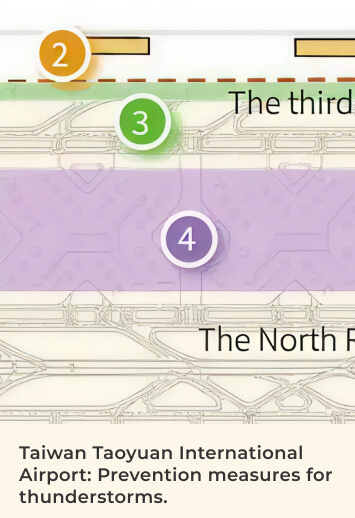
The airport conducted a vulnerability assessment which highlighted key areas at risk during thunderstorms :
- Flight Operations : Thunderstorms can cause turbulence, wind shear and lightening strikes which can impact aircraft safety.
- Ground Operations : Heavy rainfall and lightening can disrupt ground handling, aircraft handling and passenger boarding processes.
- Infrastructure : Flooding and lightening can damage airport infrastructure, especially vertical structures.
Measures
Lightening
- A Lightning Warning System (ALWS) has been implemented at Taoyuan International Airport (TPE) to minimise the potential threat of lightning strikes and ensure the safety of airport staff. The system features two warning classes: Flashing Amber and Flashing Red, both accompanied by a buzzing alarm. The Amber Lightning Warning is activated when lightning strikes are detected within 8km of the airport. During this warning, airport staff are not required to cease non-essential activities in open areas, and any decision to suspend work is coordinated by the airline and ground operations unit. The Red Lightning Warning, on the other hand, is triggered when lightning strikes are detected within 3km of the airport. This warning necessitates more immediate action to ensure safety. The implementation of these warning classes is part of the Operating Procedures of the Thunderstorm (Rain) Warning Notification System at Taoyuan International Airport, designed to protect staff and maintain operational efficiency during adverse weather conditions.
Thunderstorm / Change in Rainfall
- TPE the construction of the third runway responds to the changing rainfall patterns. A separate drainage plan was created for the core area vs the buffer area. The core area includes critical infrastructure such as the runway, taxiway and terminals while the buffer area includes the northern boundary near the Nankan Creek and Puxin Creek floodways. The drainage design considers short-duration rainstorms for the 200-year recurrence period as a design parameter.Further, the runway and taxiway were elevated to ensure flight safety. The entry and exits of the critical buildings were designed to be away from the impact of the external water levels. In the buffer area, the drainage protection was enhanced. A floodway was added to improve the flood carrying capacity of the Puxin Creek and flood detention ponds were added to retain extreme storm water in designated areas.