

Hazard- Thunderstorms, Lightning and Rain
Sydney International Airport: Impact of lightning on aircraft operations
The Impact of Lightning on Sydney Airport’s Aircraft Operations
Keywords
Sydney Airport, one of Australia’s busiest and most significant airports, experienced a robust year in 2024. The airport welcomed over 41 million passengers throughout the year, marking a significant recovery and growth compared to previous years.
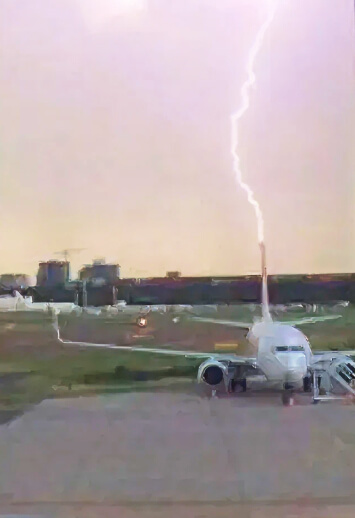
Operational challenges and impact of lightning
Lightning can significantly impact operations at Sydney Airport, as well as other airports worldwide. One of the primary concerns is safety, particularly for ground staff working on the tarmac. During lightning storms, ground operations are often halted to protect workers from potential strikes. Additionally, lightning can cause delays and disruptions, affecting both departures and arrivals. This can lead to a ripple effect, causing delays across the entire air traffic network.
Modern aircraft are designed to withstand lightning strikes, which typically hit the extremities like the wingtips or nose and then travel along the metal body before exiting. While this usually doesn’t affect passengers, it can still cause minor damage that requires inspection and repair. Furthermore, lightning can damage airport infrastructure, including air traffic control towers and other critical systems, leading to further operational challenges. Advanced lightning detection and weather monitoring systems are crucial for airports to manage and mitigate these risks, providing timely warnings and ensuring safety.
Measures
Sydney Airport has installed a Thunderstorm Warning System (TWS) in collaboration with Qantas. The system operates in different stages, starting with a general lightning warning issued by the Bureau of Meteorology (BOM) and Qantas Meteorological Office (QMET) at 30 nautical miles (NM). This warning is communicated to Sydney Airport operations staff by the Integrated Operating Centre via radio. The next step involves activating the White Strobe to warn airport users that the thunderstorm is within 10NM. In the third stage, the White Strobe changes to a Blue Strobe to indicate that the thunderstorm is within 5NM of the airport. Activation of the system is performed by the Integrated Operations Centre and supplemented by a radio call and/or SMS alert.
The warning system is part of Sydney Airport’s climate change adaptation initiatives. Detailed lightning protection studies are currently being undertaken as part of the Climate Change Adaptation Plan, with more details to be shared upon completion. Sydney Airport employs several measures to mitigate the impact of lightning on its operations, including advanced weather monitoring systems to track storm activity in real-time, operational protocols to halt ground operations during storms, infrastructure protection to safeguard critical systems, and regular safety training for staff to handle lightning-related emergencies effectively.