

Hazard- Rise in Groundwater Level
Preventing ground water fluctuations at Kansai International Airport
Clay water barrier to protect the airport island ground
Keywords
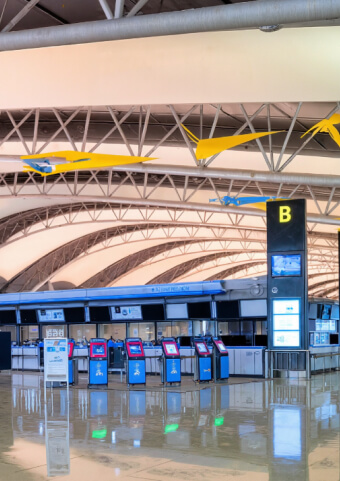
Kansai International Airport (KIX) is a remarkable feat of engineering, located on an artificial island in Osaka Bay, approximately 38 kilometres southwest of Osaka Station. Since its opening on 4 September 1994, KIX has become a crucial hub for international travel in Japan. KIX is well-connected to the surrounding cities of Osaka, Kyoto, and Kobe through an extensive network of rail, bus, and ferry services, ensuring easy accessibility for passengers. In 2023, the airport handled over 25 million passengers. Kansai International Airport continues to focus on modernisation and sustainability initiatives to face climate hazards.
KIX is surrounded by an environmentally friendly rock seawall with rock material quarried from a mountain. This makes the structure water permeable, allowing the surrounding seawater to flow into the airport island ground increasing the groundwater levels. When the sea level drops, the ground water escapes through the walls, dropping the levels. This pattern is significantly impacted by the sea level rise and the tidal surges experienced by the island. Abnormal tides occurring on an increasing number of days also impact the groundwater levels. This causes groundwater to seep through drainage vents into low lying areas and basement rooms where waterproofing is inadequate.
In response, KIX built water barriers to prevent seawater permeation into the airport island ground. A layer of non-permeable alluvial clay was installed to a depth of 30 meters. This was tied by a string of columns made from cement, soil and sand. This construction was completed in 2006.
The water barriers eliminated the rising ground water levels on the island due to abnormal tide events and typhoon surges, isolating it from the surrounding sea level rise as well. It also protects the island from subsidence and maintains the strength of the ground.