

Hazard- Prolonged Heat and Heatwave
Addressing Heat and rising temperatures at Changi Airport
Laser Crack Measurement System to enhance pavement maintenance
Keywords
Singapore’s Changi Airport is in the Changi district at the eastern end of Singapore, approximately 24 kilometers (15 miles) east of Singapore’s Downtown Core. The airport’s elevation is about 6 meters (20 feet) above sea level. In 2024, the airport handled 67.7 million passenger movements.
In May 2024, Singapore recorded its highest temperature of 37 degree Celsius in the last 40 years. The Meteorological Service Singapore has also said there is a 70 to 80 percent chance of an El Nino event occurring, which will bring hotter and drier weather.
Rising ambient temperatures can pose risks to airport runway conditions and staff working on the airside. Changi Airport Group (CAG) has undertaken multiple measures to mitigate these risks.
- Developed a Climate Adaptation Pathway to understand their exposure and potential mitigation measures
- Structural measures for resilient pavement design and condition monitoring
- Operational measures to ensure safe working conditions for airside workers
Evidence of the Solution(s) Effectiveness or Potential Impact
Climate Adaptation Pathway
Netherlands Airport Consultants was tasked with helping Changi with their climate adaptation journey. First, a climate scenario modelling was conducted to understand potential climate changes in the airport’s vicinity. By combining operational data with weather information from the Meteorological Service Singapore and the Centre for Climate Research Singapore, potential future operational challenges due to climate change were identified.
Next, stakeholders were engaged in CAG’s climate resilience efforts through workshops to map climate risks. Together with airport stakeholders, the potential impact of disruptive events was assessed and how a single disruption could affect multiple assets and operations was identified. Using the digital tool STAIN, the cascading effects were identified and highlighted the interconnected nature of airport operations.
After identifying key risks, CAG collaborated closely with stakeholders to develop measures to mitigate these risks and enhance airport resilience, addressing infrastructure, procedures, and guidelines.
The result of this process was a Climate Adaptation Pathway, detailing how Changi Airport can become more resilient to climate change and potential risks in terms of sea level rise, erratic wind patterns and rainfall events, lighting strikes, extreme heat stress, reduced visibility and wildlife. The pathway lays out what steps the airport can take today, in 2030 – and what can be achieved by 2050. By implementing the recommendations in this plan, Changi Airport can continue to be a safe, efficient, and world-class transportation hub and gateway to Asia for years to come.
Adaptation measures to address heat
The Engineering and Development (E&D) Cluster collaborated with technical experts to enhance pavement resilience against harsher weather conditions. This involved improving the asphaltic mix design and continuing the use of polymer additives to ensure higher runway durability, even under high temperatures.
To address the combined effects of rising temperatures and the increasing frequency of tropical storms, CAG introduced a Laser Crack Measurement System (LCMS) to enhance aircraft pavement maintenance. This system uses lasers and sensors to survey runway conditions, even in complete darkness during nighttime runway closures. It can detect sub-millimeter anomalies that could lead to pothole formation during wet weather and high temperatures. Combined with data analytics and machine learning, the system enables pre-emptive detection and predictive maintenance, ensuring greater business continuity.
Airside working conditions
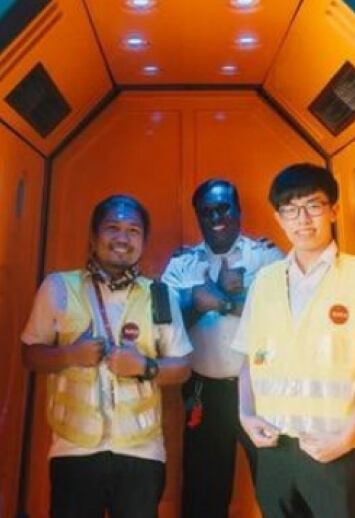
Further, to ensure good working conditions for its 30,000 staff working on the tarmac, Changi placed ‘refresh pods’ on the airside. Two cooling devices were recently installed as part of CAG’s new measures to reduce the risk of heat injuries among workers. These pods circulate cool air for approximately 3½ minutes each time, using ultraviolet-light sterilization to clean the air. Each pod stands 2.5 meters high, can accommodate up to five workers simultaneously, and operates throughout the day.
CAG also deploys a drinks truck to provide free cold isotonic beverages to airside workers regularly from June to August, with potential extensions if hot weather persists. CAG also encourages companies to implement heat acclimatization protocols for new workers, gradually exposing them to outdoor conditions and allowing more frequent breaks until they adjust.