
Home  Newsletter June 2026
Newsletter June 2026
Making the case for DRI
Resilient infrastructure is one of the smartest investments a nation can make — saving lives, protecting economies, and securing future growth.
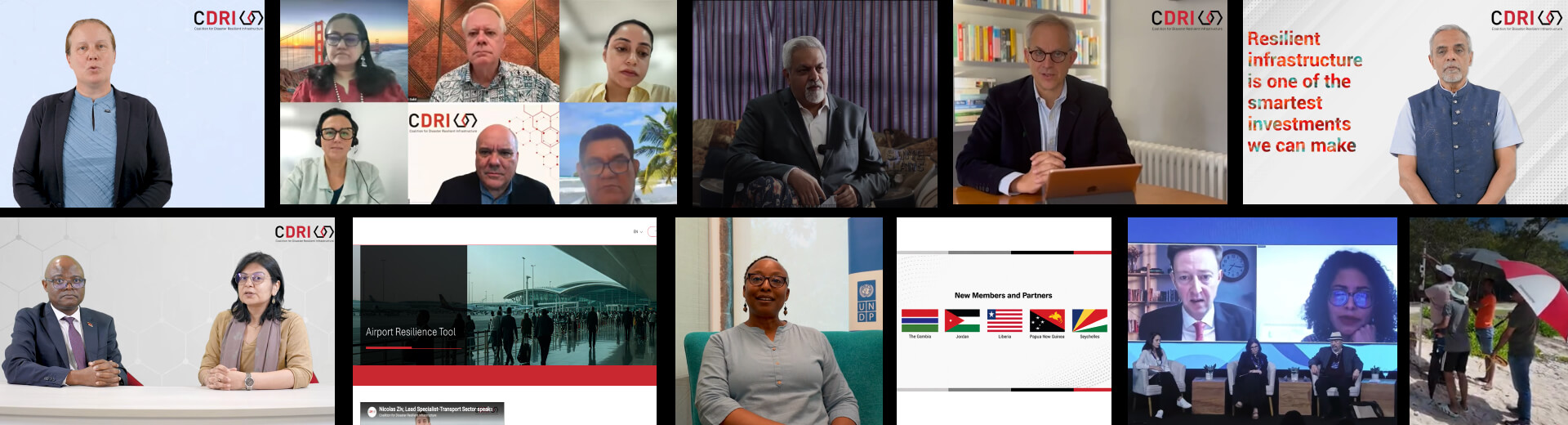
Speaking exclusively with Bhutan’s national newspaper, Kuensel, Director General Amit Prothi discusses how CDRI is supporting Bhutan to strengthen infrastructure resilience through preparedness, rapid response mechanisms, and risk-informed planning to build a safer future.
Building the Coalition

Strengthening the Coalition
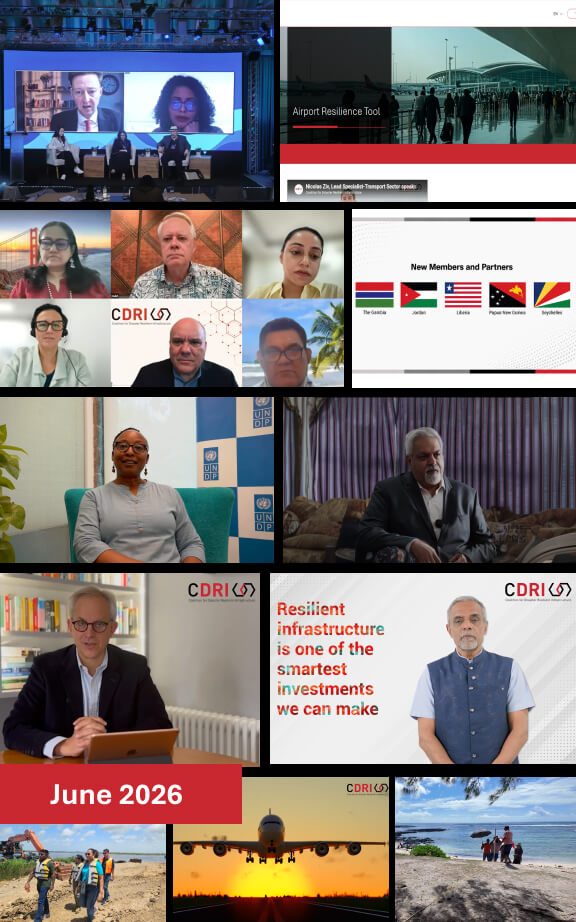
In the last quarter, The Gambia, Jordan, Liberia, Papua New Guinea and Seychelles joined the Coalition, growing the total membership to 70.
Brazil began its two-year term as Co-Chair in April, taking over from France. Its priorities include climate adaptation, broader global engagement, and stronger South-South cooperation.
Leading Global Conversations on DRI
Enhancing coastal infrastructure resilience
Speaking at a panel on the Ocean–Climate Nexus, David White highlighted CDRI’s work supporting SIDS and coastal communities identify and manage infrastructure risks.
Hosted by the Institute for Climate and Society, Brazil, discussions underscored the importance of resilient coastal infrastructure to protect lives, livelihoods, and economies from climate and disaster risks.
Building a more resilient Pacific
A DRI Dialogue convened by CDRI and the Pacific Region Infrastructure Facility brought together experts to share insights on risk assessment, resilience finance, governance, technology, and nature-based solutions.
Discussions explored how evidence-based approaches can strengthen resilient infrastructure across Pacific Island nations.
Advancing DRI in climate negotiations
CDRI convened the first Working Group of UNFCCC negotiators from member countries at the 64th session of the UNFCCC Subsidiary Bodies (SB64) in Bonn, to discuss how infrastructure resilience can be better integrated into global climate negotiations.
Ahead of the meeting, CDRI also submitted a position paper outlining how DRI can support the implementation of the Paris Agreement.
Champions of DRI
Dr. Angela Lusigi speaks on DRI
As a founding partner of CDRI, the United Nations Development Programme shares a commitment to resilience as a foundation for sustainable development. Dr. Angela Lusigi, Resident Representative, UNDP India, discusses how jointly developed tools are advancing the case for resilient infrastructure investments, while IRAF supports countries through technical assistance and capacity building.
Promoting risk-informed policy and practice
Adaptation strategies for a more resilient Mauritius
Dr. Jay Rovisham Singh Durga, Head of Department at Université des Mascareignes and CDRI Fellow, speaks how coastal erosion assessments are helping build a stronger evidence base for resilience planning in Mauritius.
Funded by CDRI, this project aims to improve adaptation efforts and strengthen resilience of coastal communities.
Strengthening Airport resilience
A first-of-its-kind Airport Resilience Tool has been launched to support risk-informed planning, preparedness, and resilience-building through tailored guidance, practical measures, and global best practices. Increasing climate-related hazards place unprecedented pressure on airport infrastructure worldwide.
Mobilizing finance for long-term Resilience
Disasters disproportionately impact vulnerable countries, eroding economic growth, fiscal stability, and development gains. Much of the financing remains focused on recovery rather than reducing risk before disasters strike. Alex Chavarot, Lead Author of the GIR 2025 Finance Working Paper, explores how countries can mobilize finance to build long-term infrastructure and financial resilience.
Enhancing capacities to impact DRI & post-disaster recovery
Resilience Dividend as high as 12:1
Investment in resilient infrastructure can generate returns of up to 12:1, according to a new CDRI study that highlights the growing fiscal risks posed by climate and disasters. Launched with India’s Department of Economic Affairs, the report underscores the need to mainstream disaster resilience across infrastructure planning and investment.
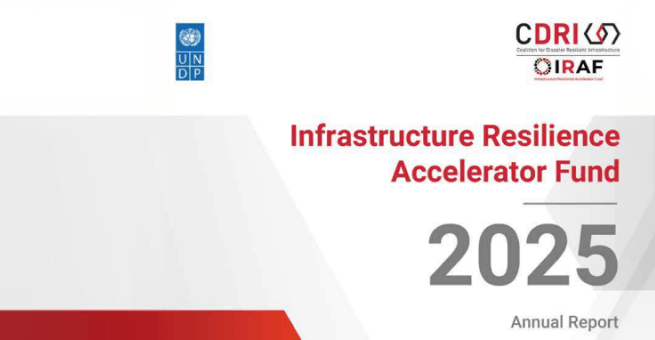
Turning resilience ambitions into measurable impact
The IRAF Annual Report 2025 showcases the power of investing in resilience. In 2024, nearly US$7 million was mobilized to support projects across vulnerable regions, strengthening infrastructure, building institutional capacity, and advancing innovative solutions that help communities better withstand climate and disaster risks.
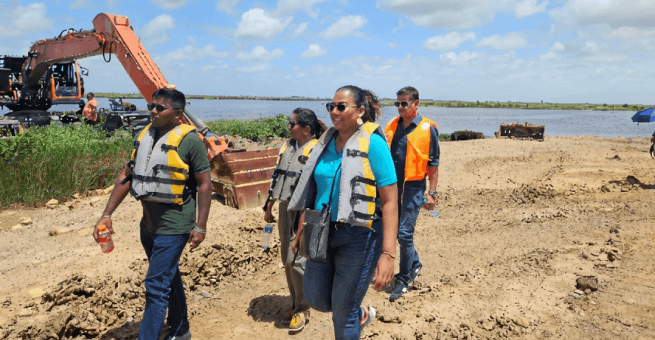
Strengthening resilience through smarter water management
CDRI is supporting the Government of Guyana to strengthen climate resilience through improved drainage and irrigation systems. A project, implemented by GGGI and the Ministry of Agriculture has produced a new National Drainage and Irrigation Strategy 2030, providing a roadmap to reduce flood risk, enhance agricultural productivity, and protect vulnerable communities.
Viewpoint
Secretariat testimonial
With infrastructure systems facing increasing pressure from climate change, CDRI’s infrastructure finance expert, Lorraine Alix, who is on secondment from the Government of France, shares how the Coalition is driving a shift in positioning resilient infrastructure not as a cost, but as a strategic investment that delivers lasting value.