
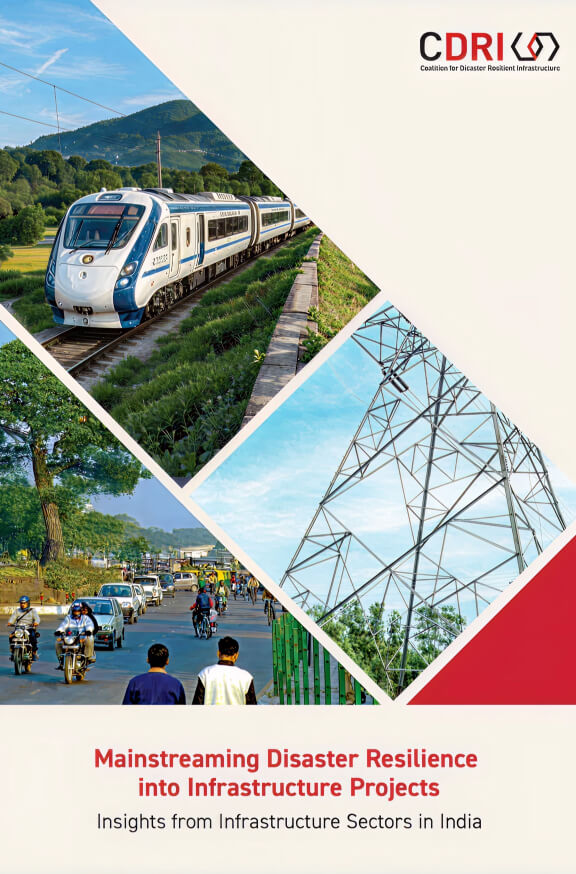

Mainstreaming Resilience into Infrastructure: A Report

The report highlights the urgent need to embed disaster resilience into India’s infrastructure development. With India projected to spend $4.51 trillion by 2030 to achieve its $5 trillion economy vision, natural hazards pose a risk of losses of up to $1.02 trillion.

The study focuses on roads, railways, and power sectors, analyzing contractual frameworks, policies, and vulnerabilities. It introduces two key outputs: the Resilience Cost-Benefit Analysis (RCBA) tool, which demonstrates a benefit of up to $12 for every $1 invested in resilience, and a toolkit that guides ministries and bidders in integrating resilience measures.

Limitations include reliance on historical hazard data and partial coverage of agreements.

Overall, the study provides actionable recommendations to mainstream resilience across policy, design, financing, and project lifecycles, ensuring sustainable growth and infrastructure safety.

Key points

Aishwarya Pillai

Lead Specialist

Alpana heads institutional partnerships, governance, and resource mobilization at CDRI, advancing cross-sector collaborations that drive resilient infrastructure programming across Member Countries and organizations. With over 25 years of experience spanning international development, global health, and the non-profit sector, she brings deep expertise in fundraising strategy, donor engagement, and delivering strategic change. 

At CDRI, Alpana has been pivotal in forging strategic alliances with governments, international organizations, and philanthropies. She also plays a key role in fortifying institutional systems and board governance mechanisms as the Coalition transitions into an international organization. 

Before joining CDRI, Alpana held senior leadership roles at The George Institute for Global Health, Plan India, WaterAid India, and SOS Children’s Villages, leading institutional fundraising and cultivating strategic partnerships for social impact. 

She holds a Master’s in Finance & Control from Aligarh Muslim University and completed Executive Education at Harvard Business School (CSR India). Her work is driven by a commitment to building enduring, values-based partnerships that accelerate sustainable development outcomes. 

Aishwarya Pillai

Alpana Saha

Director, Partnerships, Governance, and Resource Mobilisation 

Alpana heads institutional partnerships, governance, and resource mobilization at CDRI, advancing cross-sector collaborations that drive resilient infrastructure programming across Member Countries and organizations. With over 25 years of experience spanning international development, global health, and the non-profit sector, she brings deep expertise in fundraising strategy, donor engagement, and delivering strategic change. 

At CDRI, Alpana has been pivotal in forging strategic alliances with governments, international organizations, and philanthropies. She also plays a key role in fortifying institutional systems and board governance mechanisms as the Coalition transitions into an international organization. 

Before joining CDRI, Alpana held senior leadership roles at The George Institute for Global Health, Plan India, WaterAid India, and SOS Children’s Villages, leading institutional fundraising and cultivating strategic partnerships for social impact. 

She holds a Master’s in Finance & Control from Aligarh Muslim University and completed Executive Education at Harvard Business School (CSR India). Her work is driven by a commitment to building enduring, values-based partnerships that accelerate sustainable development outcomes. 

Agathe Nougaret –