
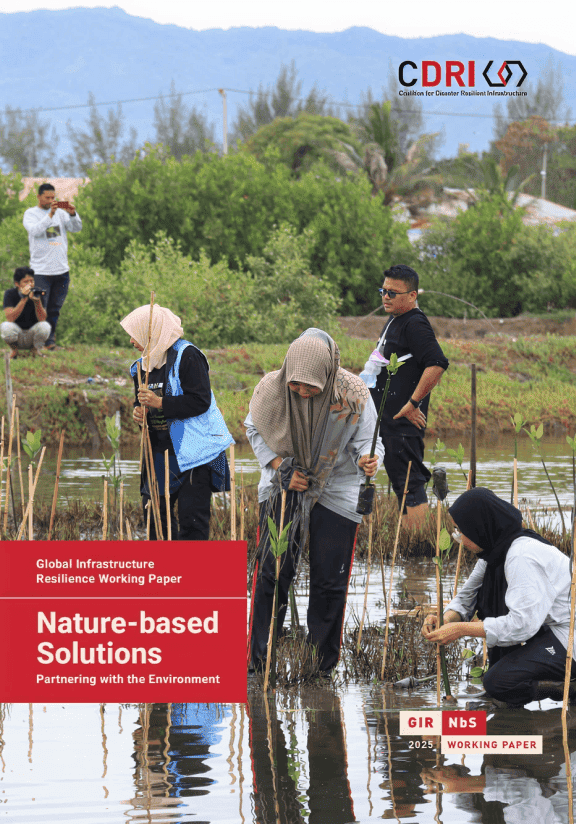


This GIR 2025 working paper argues that Nature-based Solutions (NbS) should become a core component of resilient infrastructure rather than remain small-scale environmental projects. NbS, often combined with traditional grey infrastructure in hybrid systems, help infrastructure absorb shocks, respond to disasters, and recover more effectively while delivering environmental, social, and economic co-benefits.
Case studies worldwide demonstrate their value in reducing floods, erosion, heat stress, storm surges, and landslide risks. Although NbS often require lower upfront investment, challenges include governance fragmentation, financing gaps, maintenance needs, long implementation timeframes, and risks of maladaptation.
The paper emphasizes five strategic enablers for scaling NbS: institutional reform, supportive policy and governance, technical standards, innovative financing, and capacity building. Community participation, adaptive management, and monitoring are critical. Ultimately, mainstreaming NbS requires treating ecosystems as operational infrastructure assets that strengthen long-term climate resilience and sustainable development.
Key points
- Nature-based solutions strengthen infrastructure resilience through adaptive hybrid approaches.
- Hybrid systems combine engineered reliability with natural regenerative benefits.
- NbS reduce disaster risks, costs, and environmental degradation significantly.
- Scaling requires governance reforms, financing mechanisms, and technical standards.
- Community engagement ensures long-term stewardship, maintenance, and resilience success.
- Ecosystems should be treated as operational infrastructure assets globally.