
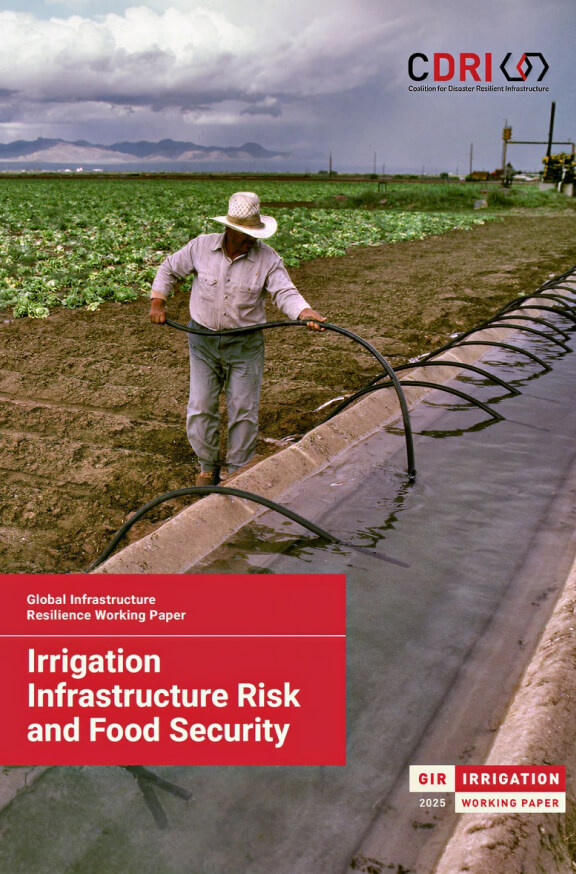

This CDRI working paper highlights irrigation infrastructure as a critical lever for global food security. Disasters – floods, droughts, storms, and earthquakes – disrupt irrigation systems, amplifying crop losses, income shocks, and food price volatility.
Although irrigation covers less land than rainfed farming, it supports a disproportionate share of food production, making even modest damage highly consequential. Ageing assets, underinvestment, and weak governance increase fragility, while climate change compounds risks by intensifying hazards and expanding reliance on irrigation. Average annual disaster losses to irrigation infrastructure approach $2 billion, concentrated in South and Southeast Asia, Africa, and small island states. Floods dominate risk, followed by cyclones, droughts, and heat stress.
Strengthening resilience through better design, maintenance, governance, and financing delivers high returns, reducing systemic risk and safeguarding food systems worldwide.
Key points
- Disasters increasingly disrupt food systems as climate change amplifies hazard impacts globally.
- Irrigation failures trigger major yield losses and significant food price volatility worldwide.
- Economic losses appear small, but irrigation disruptions create massive systemic food insecurity.
- Irrigation systems have unique vulnerabilities influenced by their design and maintenance.
- Weak governance and poor maintenance worsen agricultural crises.
- Climate change worsens infrastructure damage, heightening risks without more resilience investments.