

Hazard- Dust and Sandstorms
How Dubai International Airport Tackles Dust and Sandstorm Challenges
Technologies Ensuring Operational Efficiency at DXB
Keywords
Dubai International Airport (DXB) is one of the busiest airports in the world, especially for international passenger traffic. Located in the Al Garhoud district, it serves as a major hub for Emirates and flydubai. The airport features three terminals, with Terminal 3 being the largest airport terminal in the world by floor space. In 2024, DXB recorded its highest annual traffic ever, welcoming 92.3 million passengers. It is renowned for its efficiency and passenger experience, consistently scoring high in Airport Service Quality (ASQ) ratings.
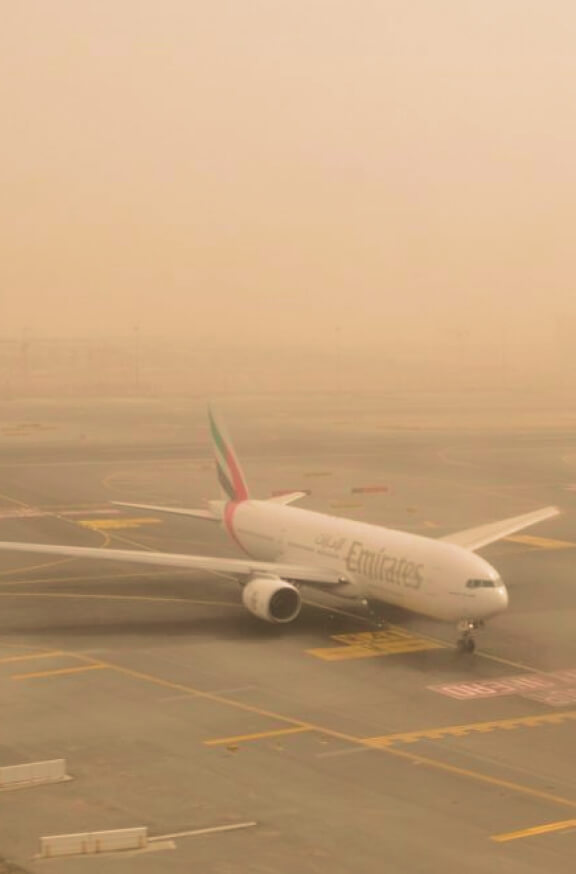
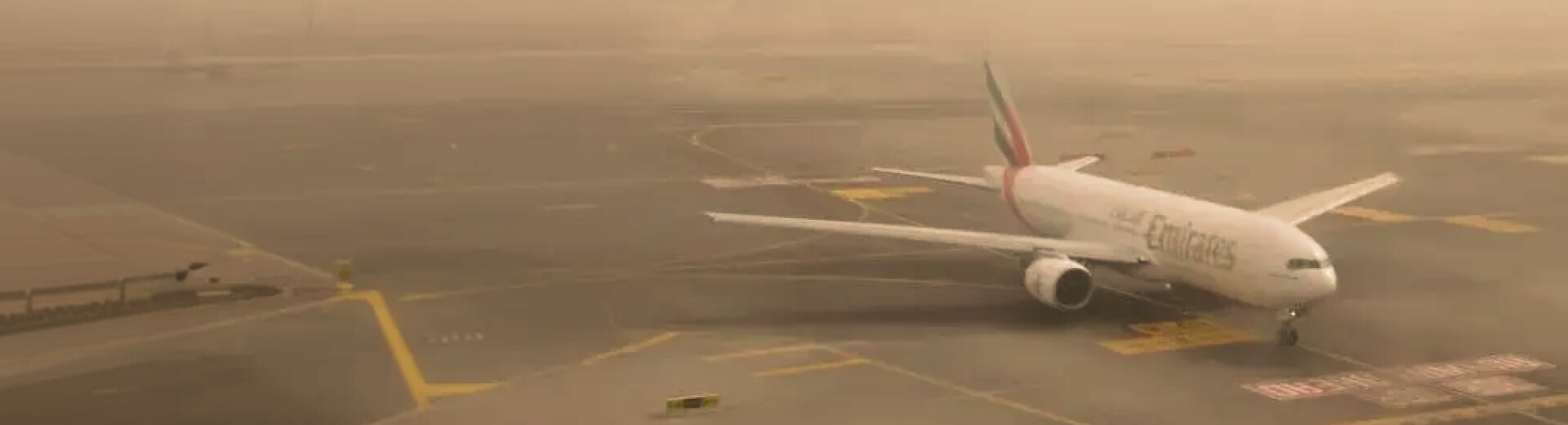
DXB has faced challenges due to dust and sandstorms. The phenomenon generally occurs once a month between November and March every year. This significantly impacts operations, where somewhere between 1,100 and 1,200 flights are landing or taking off every day. Recently, the UAE’s National Center of Meteorology (NCM) issued warnings about strong winds and dust storms affecting visibility in Dubai and other parts of the country. These conditions can disrupt flight schedules, causing delays or cancellations. Dust storms in Dubai can reduce visibility to as low as 100 meters in some areas, making it difficult for pilots during take off and landing. Travelers are advised to stay updated with real-time notifications from airlines and airport authorities to avoid inconveniences.
Dubai International Airport (DXB) has implemented several measures to mitigate the impact of dust and sandstorms. DXB is equipped with the world’s best instrument landing system (CAT IIIB) that allows it to operate in visibility as low as 50 metres, the airport conducts regular air quality monitoring to ensure a safe environment for passengers and staff, while enhanced cleaning protocols are in place to prevent dust accumulation in ventilation systems and other critical infrastructure. During severe sandstorms, operational adjustments such as flight delays or cancellations may be made to ensure safety. Additionally, passengers are kept informed through real-time updates from airlines and airport authorities.
As major technological improvements Dubai International Airport (DXB) has adopted several advanced technologies and specific plans to combat the effects of dust and sandstorms:
- Advanced Surface Movement Guidance Control System (ASMGCS): This system enhances ground traffic management, providing automated routing and guidance during low visibility conditions caused by dust and sandstorms. It includes features like enhanced surveillance and automated control to ensure safe and efficient aircraft movements.
- Ground Traffic Management (GTM) System: The GTM system, which incorporates the “Follow the Green” concept, helps manage aircraft movements during low visibility operations. This system has been validated and approved for 24-hour operations, improving safety and efficiency during adverse weather conditions.
- Pre-Departure Sequencing (PDS): This initiative enhances the predictability and punctuality of flight departures, allowing better management of aircraft during sandstorms. It helps optimize the sequence of departing flights, reducing delays and improving overall airport operations.
- Airfield Infrastructure Upgrades: DXB has upgraded its runways and other airfield infrastructure to support operations during low visibility conditions. This includes the rehabilitation of runways and the implementation of Category III (CAT-III) operations, which allow aircraft to land safely even in poor visibility.