
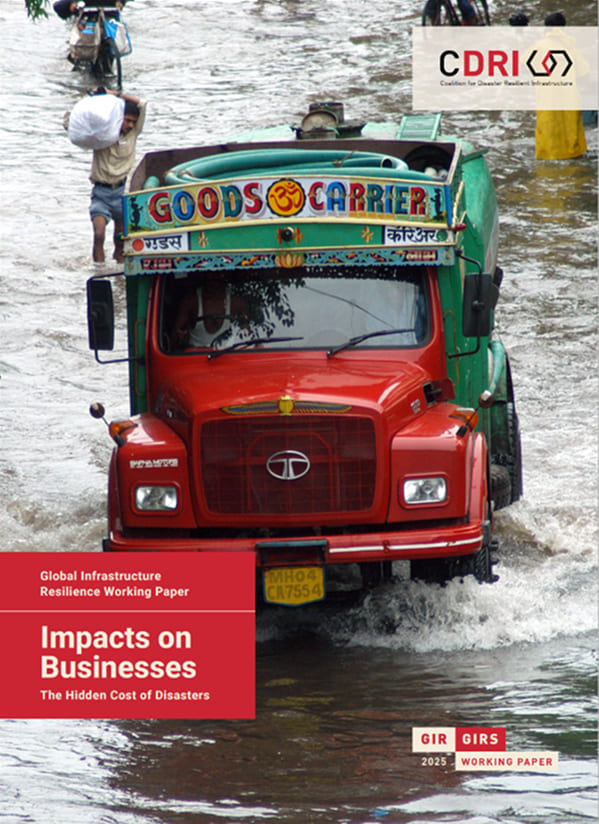


The GIR 2025 working paper examines how climate-related hazards and disasters affect businesses, infrastructure operators, and SMEs worldwide.
Based on a survey of more than 500 organizations across 50+ countries, it finds that disasters are increasing in frequency and economic impact, causing operational disruptions, supply chain failures, and financial losses. While many large businesses and infrastructure companies have continuity and risk management plans, significant gaps remain in testing, implementation, funding, insurance coverage, and crisis response. SMEs are particularly vulnerable due to limited access to finance, technology, insurance, and technical expertise.
The report emphasizes that resilience must be embedded across the entire business and infrastructure lifecycle through stronger governance, technology adoption, risk-informed financing, policy support, and capacity building. It calls for coordinated action by governments, businesses, financiers, and value-chain partners to strengthen resilience and reduce future losses.
Key points
- Disaster risks are rising rapidly, increasing business losses worldwide.
- Resilient infrastructure is essential for continuity, recovery, and growth.
- Many firms have plans, but testing remains insufficient.
- Supply chain disruptions often exceed direct disaster-related damages.
- SMEs face the greatest challenges from funding, insurance, and skills.
- Coordinated action can reduce losses and strengthen long-term resilience.