


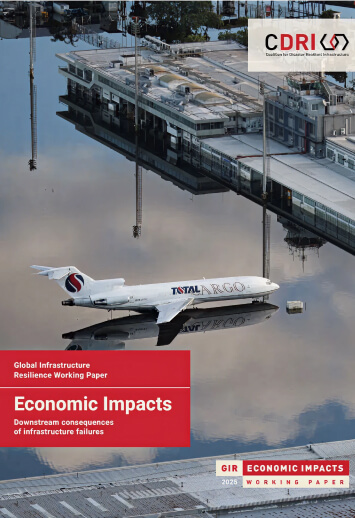

This GIR 2025 Working Paper highlights how disasters affect economies far beyond the direct damage to assets. When infrastructure services such as water, electricity, and transport fail for prolonged periods, the ripple effects disrupt businesses, livelihoods, and essential public services.
Using the Global Infrastructure Risk Model and Resilience Index (GIRI) in conjunction with the Green Economy Model (GEM), the study reveals that indirect costs are, on average, 7.4 times higher than direct damages, reaching up to 16 times higher in some countries. Between 2025 and 2050, infrastructure failures could reduce GDP growth by 5.2% annually, with losses rising to 7.4% by 2050, and even higher in vulnerable nations like Bangladesh and the Philippines.
Crucially, rapid reconstruction reduces impacts significantly – a 10-year recovery lowers GDP losses to 3%, while a 4year recovery cuts them to 2.27%. Investments in resilience and preparedness deliver substantial economic dividends.
Key points
- Economic impacts extend beyond direct infrastructure damage after disasters.
- Rapid reconstruction significantly reduces GDP losses and economic disruption.
- Indirect costs average 7.4 times direct infrastructure damage costs.
- Infrastructure failures can cause GDP losses up to 14.5 per cent.
- Proactive resilience investments yield substantial long-term economic savings globally.
- Delayed recovery compounds losses, slowing growth and reducing future investments.