
Hazard- Dust and Sandstorms
Managing Dust and Sandstorms at King Khalid International Airport
Proactive measures and technology at RUH airport
Keywords
King Khalid International Airport (RUH) is a major international gateway located approximately 35 kilometres north of Riyadh, Saudi Arabia. Opened in 1983, the airport spans an impressive 375 square kilometres, making it one of the largest airports in the world by land area. RUH serves as a crucial hub for both domestic and international travel, welcoming millions of passengers annually. In 2024, King Khalid International Airport experienced a significant surge in passenger traffic, handling over 37 million passengers throughout the year.
King Khalid International Airport in Riyadh is significantly impacted by dust and sandstorms, which are prevalent in the region, particularly during the spring. These storms can severely reduce visibility, making it challenging for pilots to land and take off safely. Consequently, severe storms often lead to flight delays, cancellations, and diversions to other airports such as King Fahd International Airport in Dammam and King Abdulaziz International Airport in Jeddah. Additionally, the storms pose health risks, causing respiratory issues for passengers and staff, which can lead to an increase in medical emergencies. This is due to the increase in PM2.5 and PM10 particulate matter.
To mitigate these challenges, King Khalid International Airport employs advanced weather monitoring systems to predict and track sandstorms, allowing for timely adjustments to flight schedules. During severe storms, the airport may temporarily halt all air traffic and only resume departures once conditions improve. Incoming flights are often diverted to ensure passenger safety. The airport also has health and safety protocols in place, such as providing masks and setting up medical response teams to assist those affected by respiratory issues. Furthermore, the airport keeps passengers informed about delays and cancellations through various channels, including announcements, digital displays, and social media, ensuring a smooth and safe travel experience despite the harsh weather conditions.
RUH has implemented several measures to protect its buildings against dust storms. Buildings are designed with sealed windows and doors to prevent dust infiltration, while advanced air filtration systems maintain indoor air quality by filtering out dust particles. Frequent cleaning schedules ensure that any dust that does enter is promptly removed, maintaining a clean environment. Additionally, temporary barriers are used during construction or renovation to contain dust and prevent it from spreading to passenger and staff areas. Regular maintenance of runways and other critical infrastructure ensures that dust and sand accumulation is minimised, helping to maintain safe and efficient operations during these specific phenomena.
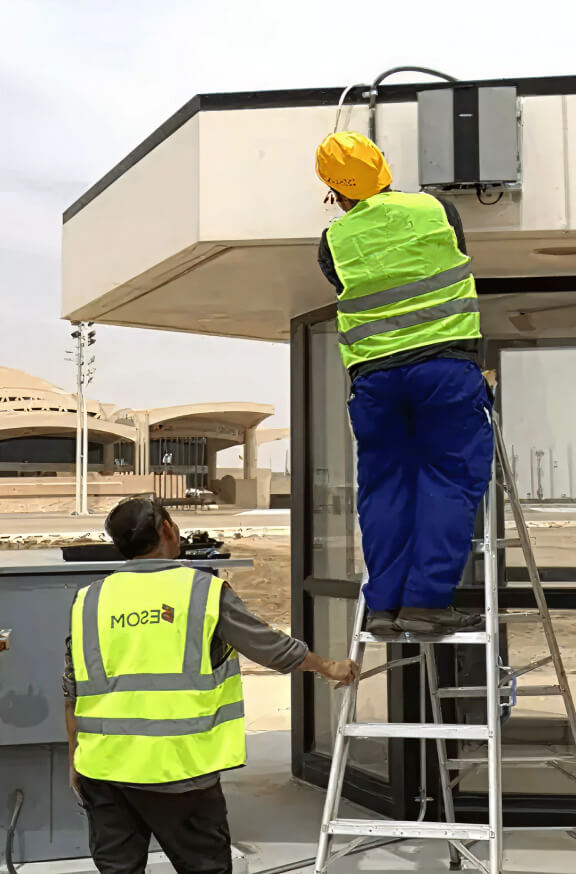
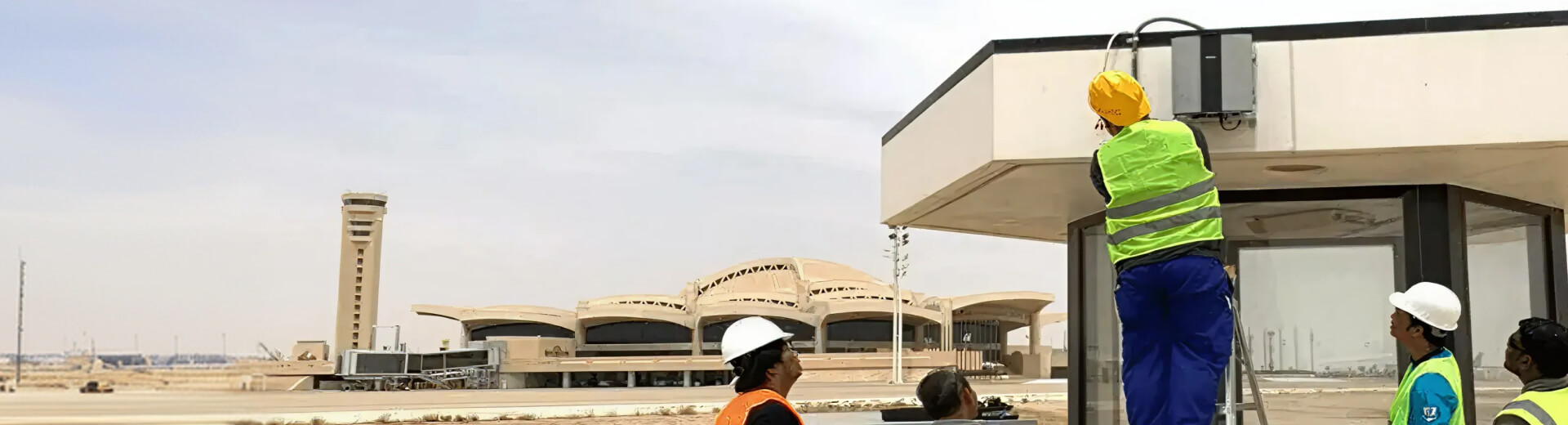
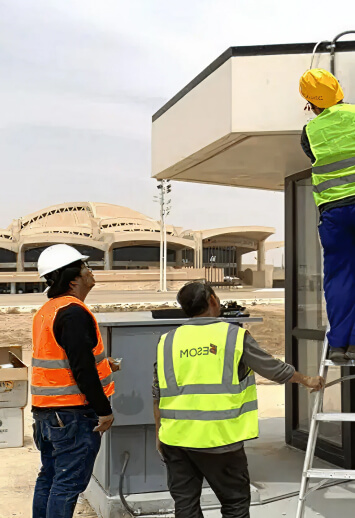
A major measure the airport has implemented is the Polludrone system to monitor and manage air quality, particularly due to the frequent dust storms and emissions from aircraft operations. The Polludrone is an advanced outdoor air pollution sensor that tracks various pollutants and environmental parameters in real-time. 8 Polludrones have been installed at RUH which monitor all major pollutants like PM1, PM2.5, PM10, NO, NO2, SO2 etc. The monitored data is used to show analytics and suggestive actions in real-time. The historical data can help predict upcoming dust storms and suggest preventive actions to mitigate the after-effects.