
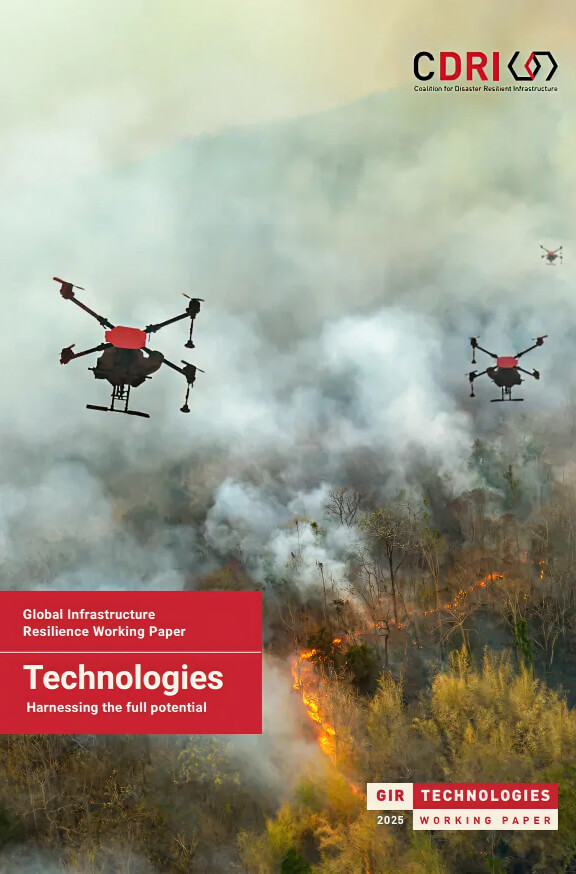


This GIR 2025 Working Paper explores how technology can transform infrastructure resilience across the disaster cycle.
It identifies three core functions: enhancing the data value chain, improving connectivity and collaboration, and strengthening asset and network performance. Technologies such as AI, IoT, digital twins, 3D printing, and nature-based solutions offer cost-effective ways to anticipate risks, maintain service continuity, and accelerate recovery.
Case studies highlight practical applications from drone-based inspections to blockchain-enabled cash transfers. While benefits include reduced losses and improved sustainability, adoption faces challenges – governance gaps, financing constraints, skills shortages, and cybersecurity risks. The paper proposes a readiness checklist and enabling environment framework to guide governments and operators in moving from pilots to scalable, inclusive, and future-ready technology adoption for resilient infrastructure.
Key points
- Technology strengthens resilience by improving data, connectivity, and asset performance.
- AI, IoT, and digital twins enable predictive maintenance and risk modelling.
- Investments in technology reduce disaster losses and ensure service continuity.
- Adoption challenges include governance gaps, financing constraints, and cybersecurity risks.
- Low-cost tools like mobile apps can complement advanced high-tech solutions effectively.
- Readiness checklist guides governments to scale inclusive, sustainable technology adoption.