

Hazard- Desertification and Droughtal Flooding
Sustainable Solutions: Phoenix Airport Embraces Xeriscape Landscaping
Phoenix Airport’s Xeriscape Journey
Keywords
Phoenix Sky Harbor International Airport, often referred to as “America’s Friendliest Airport,” is one of the busiest airports in the United States. Located in Phoenix, Arizona, it serves as a major hub for American Airlines and Southwest Airlines. The airport features three terminals and offers a wide range of amenities, including over 100 restaurants, shops, and services. In 2024, Phoenix Sky Harbor surpassed its previous passenger record, handling over 46 million passengers. This growth reflects the airport’s importance as a key gateway for both domestic and international travel.
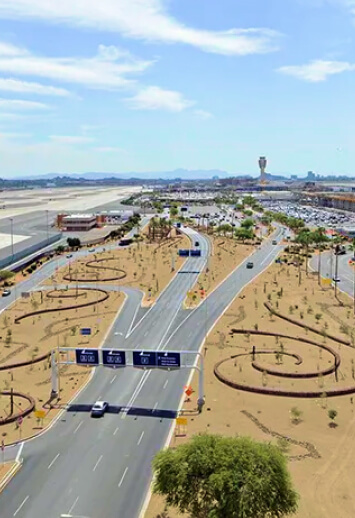
Phoenix Sky Harbor International Airport (PHX) has a comprehensive plan to address desertification and drought hazards common in the arid climate of Arizona. To address these issues, the airport has implemented several innovative measures aimed at conserving water and maintaining operational efficiency. Here are more details about the measures they have implemented:
- Water Conservation Initiatives: PHX has installed advanced water treatment technology in its cooling towers, which significantly reduces water usage through recirculation. This technology also prolongs equipment life and reduces the use of chemical additives.
- Xeriscape Landscaping: The airport has transitioned from turf to desert landscaping, known as xeriscaping, which involves replacing traditional grass with native, drought-resistant plants, This project has transformed nearly 11 acres saving over 5 million gallons of water annually and reduce maintenance costs by nearly $400,000 per year. Smart irrigation controllers monitor soil moisture and apply water only as needed, detecting leaks and automatically shutting off.
- Building Water Efficiency: Restrooms are retrofitted with low-flow plumbing fixtures and automatic shutoff valves. Buildings are designed to prioritize water efficiency, and maintenance staff are trained to keep these fixtures in good repair.
Drought Management Plan
Guided by a Drought Management Plan, Phoenix Sky Harbor International Airport closely monitors water consumption and has achieved an annual reduction of over 50 million gallons since 2014. Further reductions are planned as part of ongoing sustainability efforts. The airport’s commitment to sustainability is evident in its various initiatives aimed at reducing environmental impact and promoting resource conservation.
New terminal buildings and renovations at Phoenix Sky Harbor are designed to meet green building standards, which include measures to reduce water usage and improve overall sustainability. The airport actively engages with the community and stakeholders to promote water conservation and sustainability practices. This collaborative approach ensures that the airport’s sustainability efforts are supported and amplified by the wider community.
As part of its Smart Surfaces Initiative, Phoenix Sky Harbor is implementing cool (reflective) roofs and pavements to reduce heat and manage stormwater runoff. These surfaces help lower temperatures and improve the working environment for outdoor workers. Additionally, the airport is incorporating green infrastructure, such as permeable pavements and roof rainwater collection systems, to enhance stormwater management and reduce flood risks.
Phoenix Sky Harbor collaborates closely with the Phoenix Water Services Department to ensure a reliable water supply even during prolonged drought conditions. The airport’s water conservation efforts are part of a broader sustainability management plan that includes air quality improvement, energy use reduction, and waste management. These comprehensive measures demonstrate the airport’s commitment to environmental stewardship and operational efficiency.